
Hello everyone, I hope you’re doing well.
The case I am going to tell you about today is similar to the previous one (purely by coincidence). We have the murder of a mother, apparently committed by a family member, some family secrets and barely concealed hatred. But whereas Sylviane Fabre had a clear motive, and the circumstances of the murder she committed were clearly established, today’s case remains largely unclear on these aspects.
The story begins in 2003, in Coulognes, a small town with less than 6,000 inhabitants near Calais in Northern France. It is not a quiet, middle-class neighborhood, but it’s not an area plagued by crime and violence either. It is the kind of place where people get by and do the best they can.

This is where Monique Lejeune, a true Calais native, lives. She was born here and started working at an early age in the lace factories, a real heritage of the region, before getting married and becoming a housewife. Despite her unhappy marriage, caused by her husband’s violence, she had three sons: Jean-Luc, Franck, and Pascal. A woman of character, she eventually left her husband, who later committed suicide, and found love again with Claude Lejeune, whom she married in 1984. At the time of their marriage, Claude had been separated from the mother of his five daughters, Béatrice Matis, for 10 years. So there were no issues of jealousy, and the blended family (a large one, with eight children in total) got to know each other and grew to like each other more or less. Everyone could have lived an ordinary life, but the events of February 8, 2003 forced them to confront dark truths that they had been trying to live with without really facing up to them.
That morning, Monique’s neighbor wakes up, probably in a bad mood. Monique’s dogs have barked all night, much to the dismay of the neighborhood. She opens her shutters and is met with a horrific sight: Monique’s body is lying in the driveway of her house, motionless and covered in blood.
Monique was stabbed 58 times, including about ten fatal wounds and many defensive wounds. The police are called and discover a scene of carnage. There is blood everywhere in the entrance to the house and on the gate.
Given the size of the family’s dogs and the fact that one of them is trained to attack, the police call the Animal Protection League to have the four-legged companions removed. This initiative is well-intentioned, but it is the beginning of a series of mistakes that will greatly complicate the investigation. When the professionals arrive, they are forced to walk right through the middle of the crime scene, thereby disrupting the examination.
Despite this, investigators find a clothing button near Monique’s body, footprints and a handprint in the blood, as well as a pack of cigarettes, so there is still hope.
An autopsy is performed, and the medical examiner determines that Monique died between 8 p.m. and midnight on February 7. He also finds skin under her fingernails and immediately sends it for analysis. Given the violence of the murder, it is assumed that the perpetrator is a man.
When questioned, Monique’s family points the finger at a neighbor who was in conflict with Monique and Claude. This neighbor, who is decidedly gentle and empathetic, explicitly rejoices at Monique’s death when investigators interview him. However, he is cleared of suspicion because he has a solid alibi. The investigation does not start from scratch, however, as he in turn leads investigators to a new suspect: Jean-Luc, Monique’s son.
On the afternoon of February 7, Claude, Franck, and Pascal left to attend a family party in the Paris area. Monique, a homebody by nature, preferred to stay home and take care of the dogs.
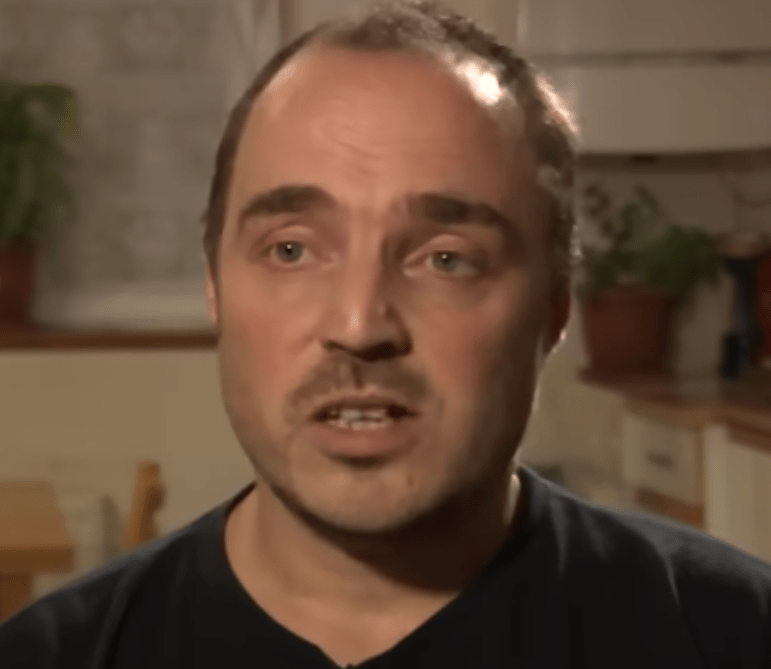
In the early evening, Jean-Luc, who also did not go to the party, stopped by his mother’s house to get a haircut and have a glass of sparkling wine. He then returned home and spent the rest of the evening taking care of his baby. At least, that is what he tells investigators when they question him.
Jean-Luc’s home is searched, and he becomes even more suspicious. The police find traces of blood in the common areas of his building and on his bicycle. They also search his brother-in-law’s apartment, which is right next door, and find a pair of pants in the washing machine that, although they have just been washed, still have suspicious stains on them. What’s more, they don’t seem to be the brother-in-law’s size, but rather Jean-Luc’s.
Jean-Luc is taken into custody. He is in a very fragile psychological state, and the death of his mother combined with the suspicion is too much pressure for him. He is in such a state that investigators wonder whether his confession would be admissible if he made one.
At the same time, a couple arrives at the police station. They explain to investigators that they received a strange phone call, apparently made by accident. They didn’t hear everything, but two women seemed to be talking about a certain Jean-Luc, his depression, an alibi, and a pair of pants. The couple heard about the murder, so they made the connection. Fate really seems to be against Jean-Luc.
The investigators track down the owner of the phone: it’s Jean-Luc’s brother-in-law. They assume that the two female voices are the brother-in-law’s mother and sister, which both of them strongly deny.
All these elements are highly suspicious, but science eventually clears Jean-Luc: the blood on his bike is animal blood, the blood in the common areas belongs to a neighbor who injured himself, and the stains found on his pants are grease. The investigators lose their main suspect, but the investigation will soon pick up momentum and create a surprise.
In early March, the lab sends its report: the skin found under Monique’s fingernails belongs to a woman. The investigators therefore decide to take samples from all of the victim’s female acquaintances.
On March 27, before the samples were even taken, Béatrice Matis, Claude Lejeune’s ex-wife, goes to the police station and confesses that she has lied in her initial statement. Although she has said that she had not seen Monique for a month at the time of the murder, she confesses that she went to see her on February 7 at around 7:30 p.m. She explaines to investigators that she went to see Monique to suggest organizing a family party to reconcile their children. She wanted it to be a surprise, which is why she waited until Monique was alone (her daughters had told her that her husband and sons would not be there). However, she did not even enter the house and did not stay long because, according to her, Monique was acting cold and seemed to be waiting for someone. As for the skin under her fingernails? Monique apparently tripped and scratched her while trying to catch herself. Why the change in story? Beatrice was afraid of being suspected.

Of course, she is taken into custody and examined by a doctor. She does indeed have a scratch on her arm, but it looks too deep to be accidental. And why did she have her arms uncovered in February when she didn’t even step in the house?
Her home is searched, and it’s shocking. There is so much rubbish everywhere that one can wonder how Beatrice manages to sleep or move around. There must also be the smell that goes with this kind of mess, which makes me think of the poor people who have to carry out the search. Despite the circumstances, the search is fruitful, and burnt clothes are found in the stove.
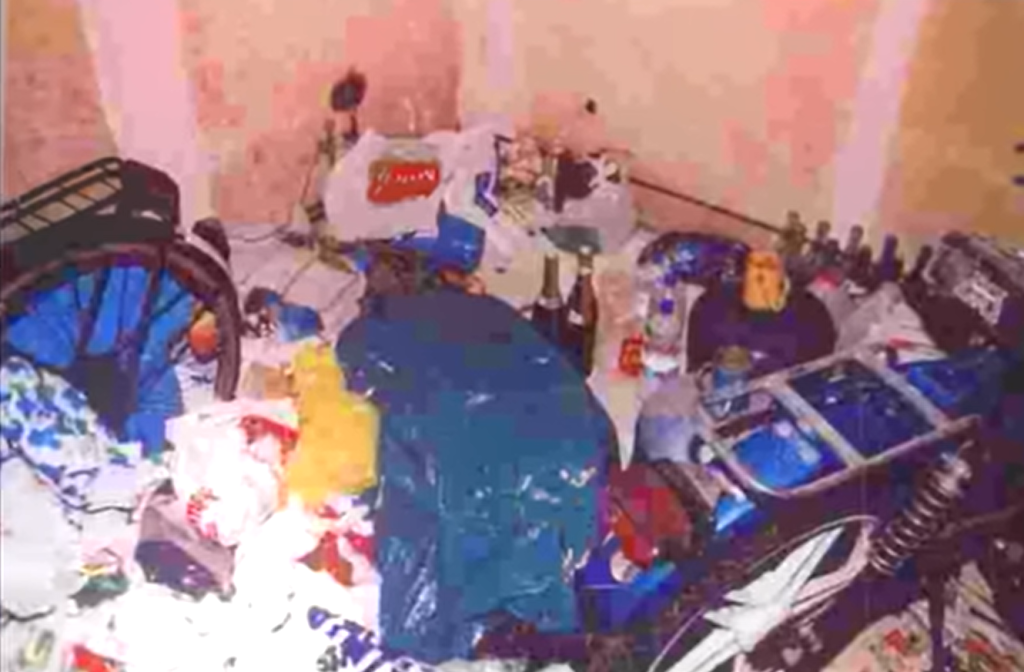
On the other hand, the investigators notice that Beatrice’s car is strangely clean compared to her home. As if it has been cleaned recently…
As if to reinforce the police’s suspicions (although this was to be expected), the laboratory confirms that the skin under Monique’s fingernails belongs to Beatrice. Finally, it is discovered that before going to the police station, Beatrice called her relatives to give them her new version of events, as if she wanted to test her new statement. It is therefore highly possible that she killed Monique, but why?
To attempt to answer this question, we need to go back in time.
Béatrice Matis is 58 years old in 2003. Her French mother and North African father named her Aïcha at birth, and her mother raised her alone, her father having quickly disappeared from the picture. Not much is known about her childhood, except that she started working at age 14 and decided to change her name to Béatrice, thinking that being called Aïcha in Calais made life too complicated.
Beatrice was barely 18 when she married Claude Lejeune in the early 1960s. She gave birth to five daughters in ten years, but eventually left Claude in 1974, blaming him for his heavy drinking.
After her divorce, she worked a series of odd jobs, then opened a bar, which she eventually sold in 2000. From then on, it is unclear how she earned a living. She spends several months a year in England, but it is unclear what she does there, as even her daughters are unable to reach her when she is away.
The pain point lies at the family level. Béatrice gets along with her daughters, and also got along with Monique and her sons. However, everything changed when one of her grandsons accused Jean-Luc of sexually assaulting him. Jean-Luc obviously denied everything and was supported by his family, while Beatrice and her daughters supported the child. Despite the seriousness of the alleged facts, the case never went to court, but its impact on both families is undeniable. Perhaps this conflict drove Beatrice to the worst.
Investigators believe they have enough evidence, so Beatrice is charged and placed in custody. According to the police, she confesses on March 29 while they are on their way to prison.
She explains that she had indeed gone to Monique’s house to try to reconcile with her, but that Monique refused to talk and began insulting her daughters. Enraged, Beatrice went to get a knife from her car, which she always keeps there just in case, and then returned to attack Monique. Monique gained the upper hand during the confrontation, to the point where Beatrice began to flee. Monique then chased her down the driveway, and Beatrice stabbed her in a panic. Once Monique was motionless, she left and threw the knife into a supermarket dumpster before returning home and burning her clothes.
This account matches the autopsy, which determined that Monique had many defensive wounds, some of which showed that she had tried to grab the knife. However, investigators are faced with a major problem. The confession they have just heard was made outside the legal framework and is therefore inadmissible. They therefore ask Béatrice to write to the investigating judge to request a new hearing so that her confession can be used.
On April 2, she is questioned by the investigating judge and changes her story once again. She claims that she has been forced to make these confessions by the investigators and reverts to her previous version of events. She is nevertheless returned to custody, and the proceedings continue. After 28 months of investigation, Béatrice is released on probation.
The trial begins on October 5, 2009, in Saint-Omer. Béatrice appears in court as a free woman, defended by none other than Éric Dupont-Moretti, the legendary French lawyer and headache. He goes straight on the offensive, attacking the work of the investigators. It is true that there were shortcomings in their work: the crime scene was poorly preserved and the evidence found there was under-exploited. Not to mention Béatrice’s alleged confession, which Maître Dupont-Moretti describes as “legally scandalous and morally questionable.”
Add to this the fact that the medical examiner testifies that the absence of blood between the entrance to Monique’s house and the place where her body was found suggests that the body was moved. As Béatrice is a fairly petite woman, around 5’11 », her lawyer’s conclusion is simple: either she had an accomplice, or she did not commit the crime.
The prosecution is thrown off balance, and Maître Dupont-Moretti takes advantage of this to draw attention to someone else: Jean-Luc, Monique’s son, who had already been a suspect at the beginning of the investigation. The defense attorney points to evidence suggesting his guilt, and does so so effectively that the attorney for the civil parties begins to argue like a defense attorney.
Finally, Béatrice’s defense asks that Jean-Luc try on the pants found in his brother-in-law’s washing machine in front of the court. There’s just one slight problem: the pants are nowhere to be found.
Okay, I’ve tried not to comment on the work of the police and the justice system in this case, but this is getting to be a bit much…
On October 7, 2009, the court orders further investigation to find the pants and conduct additional analyses on certain sealed evidence.
The trial resumes on November 18, 2010, and the additional information yielded no results. Béatrice maintains her version of events, asserting that she had simply made the “false” confession to confirm the version that the investigators had repeatedly imposed on her during her police custody.
This time, the defense has a new witness. Béatrice’s grandson, now 20 years old, takes the stand. Not only does he defend his grandmother, but he also reiterates his accusations against Jean-Luc. The determination of the defense and the shortcomings of the prosecution make the verdict obvious.
On November 24, Béatrice Matis is acquitted. This verdict is a first for the French justice system, as it is the first reasoned verdict by a criminal court in France. According to Article 353 of the French Code of Criminal Procedure, judges and jurors in criminal courts base their decisions solely on their innermost convictions. However, in this case, the judges answered 16 questions drafted in consultation with the civil parties, the prosecution, and the defense. At that time, the ECHR had just condemned Belgium for failing to provide reasons for a verdict, and it seems that France wanted to take the lead before being condemned in turn.
The prosecutor does not give up in the face of the acquittal and appeals. Béatrice Matis is therefore retried on January 23, 2012, in Douai. She is still represented by Maître Dupont-Moretti, who this time faces a formidable opponent : Luc Frémiot, another judicial monument. This prosecutor is much more combative, emphasizing the incriminating evidence: the DNA, the changes in her story, the burned clothing, the motive… Even though Béatrice’s confessions are inadmissible, the testimony of the investigators who heard them is not. They are therefore called to testify.
The tide turns, and Béatrice is finally sentenced to 15 years in prison. This must be a great shock for her, as she suffers a heart attack shortly afterwards. She survives and attempts an appeal to the French Supreme Court, which is rejected. We have not heard any news since, but we can assume that Béatrice is still in prison.
Despite the finality of the conviction, the case still leaves us with questions. Did Beatrice have an accomplice? Why did she go to see Monique knowing she was alone, especially if the conflict was so intense that it only took one argument to tip the scales? Was Beatrice the only one who knew she had killed Monique? What were the two women talking about on the phone if Jean-Luc did nothing? Speaking of Jean-Luc, what happened to the accusations made against him?
It seems that the Lejeune and Matis clans will forever be shrouded in mystery.
That’s it for today! Let me know what you think about this case in the comments, or on Reddit / Tumblr / Bluesky ! I hope you find some money on the ground, and I’ll see you next time !
 Murder, Wine & Cheese
Laisser un commentaire