
Hi everyone, I hope you’re doing well!
In the last article, I told you about a man who was mistreated by the system and inspired awe and support all over France. Today, I’m going to tell you about a man who was never mistreated (in his adult life, at least) but who nevertheless decided to take « justice » into his own hands, in a brutal manner that inspires nothing but disgust. Without further ado, here is the Hennequin case!
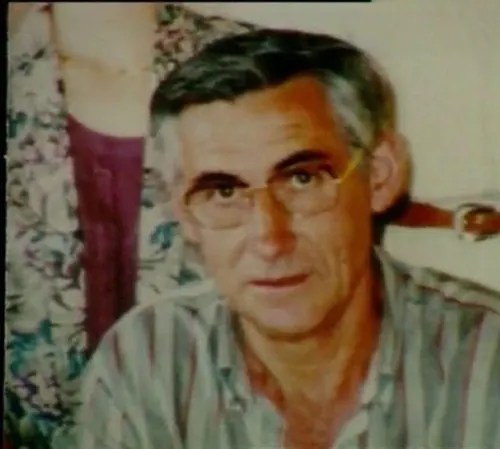
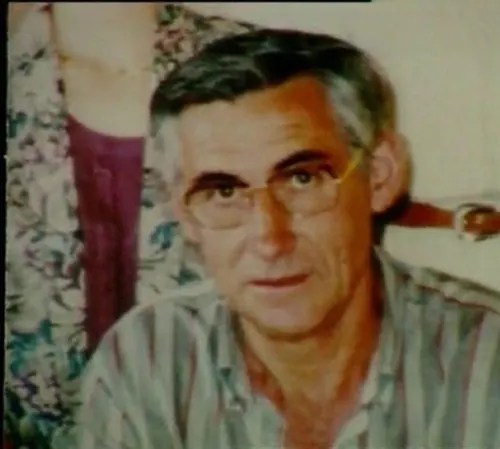
Jean-Baptiste Hennequin is born in 1935 in Fresnoy-le-Grand, 15km from Saint-Quentin. The village has fewer than 3,000 inhabitants, a church, a train station, and that’s about it. You get the picture.
In Fresnoy-le-Grand, the Hennequin family is a cause for concern. Not because of Jean-Baptiste (not yet, anyway), nor because of his two sisters, but rather because of his father. The latter, who runs a hosiery factory, often attracts attention, and not the good kind of attention. He is 6’3″ and weighs about 265 pounds, wears a cape and has a long gray beard, so he doesn’t even need to speak to scare children. He also scares adults, because often after a day at the bar, he gets angry with just about everyone. When he is drunk, he sings the Internationale in front of the police station or under the windows of the mayor or a poor schoolteacher. But that’s not what scares people the most in the village. In fact, he is called Landru because no one has heard from his wife since she gave birth to Jean-Baptiste. She has simply disappeared and remains a mystery to this day.
You must be concerned about baby Jean-Baptiste, but don’t worry, his father doesn’t really have time to influence him. Firstly, because World War II breaks out so there is other fish to fry, but also and above all because he dies in 1940 in a car accident (I’m assuming that he was drunk and crashed somewhere like an idiot). Jean-Baptiste and his sisters are thus orphaned and get separated to be placed in different foster families.
We don’t know how things turn out for the Hennequin sisters. As for Jean-Baptiste, we know that he lives with several foster families without ever finding a place that feels like home. At the age of 14, even though he is passionate about his studies, he is forced to leave school to start working. Bitter, he nevertheless continues to teach himself, combining his studies with odd jobs he doesn’t like at all.
He learns, works, grows up, and becomes a solitary, authoritarian man, convinced he is the most intelligent person in the world and unable to tolerate any criticism. Basically, he’s the annoying uncle who always brings politics up at family dinners and who is never told to shut up because he’s always there to fix the plumbing when needed (while complaining, of course). At work, he does a good job, but his colleagues find him unbearable, and he hates his bosses so much that he always ends up quitting.
Despite these glaring flaws, he manages to find love. He gets married, has three children, but the union goes sour after a while and divorce proceedings are initiated. This is when Jean-Baptiste goes from insufferable to dangerous.
In 1967, he takes his wife on a road trip to try to win her back. He must go about it the wrong way, because an argument breaks out. In a chilling display of his nasty temper, he throws himself on his wife and strangles her until she loses consciousness. After that, he undresses her, steals the money she has on her, throws her clothes into a bush, and leaves her for dead on the side of the road. He clearly intends to make the attack look like a sex crime, but he didn’t count on the stroke of luck that would save his wife. A motorist sees her on the side of the road and takes her to the hospital. Jean-Baptiste ends up in prison and is sentenced to three years. The divorce is granted on the grounds of his exclusive fault. Unfortunately, all of that doesn’t soften him.
In 1985, Jean-Baptiste strikes again. This time, his victim is a “transvestite” in the Bois de Boulogne. The “transvestite later” says that he saw Jean-Baptiste urinating at his workplace and simply wanted to make him leave, while Jean-Baptiste says that he was attacked for no reason and was simply defending himself (yeah, right). The facts are that Jean-Baptiste shoots the “transvestite” in the head with a pellet gun, causing him to lose an eye. For this, he is arrested and examined by a psychiatrist, who finds no major disorders other than intense and chronic anxiety and severe mood instability. In the end, he is sentenced to three years in prison, including one year without parole, which is very light for a repeat offender.
Once he’s done with this conviction, Jean-Baptiste resumes his life. He moves to Saint-Quentin and falls in love with the Marais d’Isle, the local nature reserve. Passionate about botany and mycology, he often goes for walks there.
He lives in a small, modest studio apartment on Rue de l’Est and has a relationship with his neighbors worthy of a Lifetime movie villain (what a surprise). Working at night, he yells at anything that keeps him awake during the day, from birds to children crying in the psychiatrist’s office next door. He particularly hates dogs, going so far as to slap a poor lady because her four-legged companion disturbs him.
The only thing we recognize about him is that he is intelligent and cultured. He speaks English very well, teaches English classes for a local association, and is very close to his students. He also speaks Spanish, Japanese, Polish, and Hebrew. Perhaps that’s why he has no trouble finding work.
Speaking of work, he still can’t stand authority. If you listen to him, everyone persecutes him and he is the only righteous man within a 100-mile radius. He continues to move from job to job, and in 1990 he ends up at the Grand Hôtel, where he is hired as a night watchman.
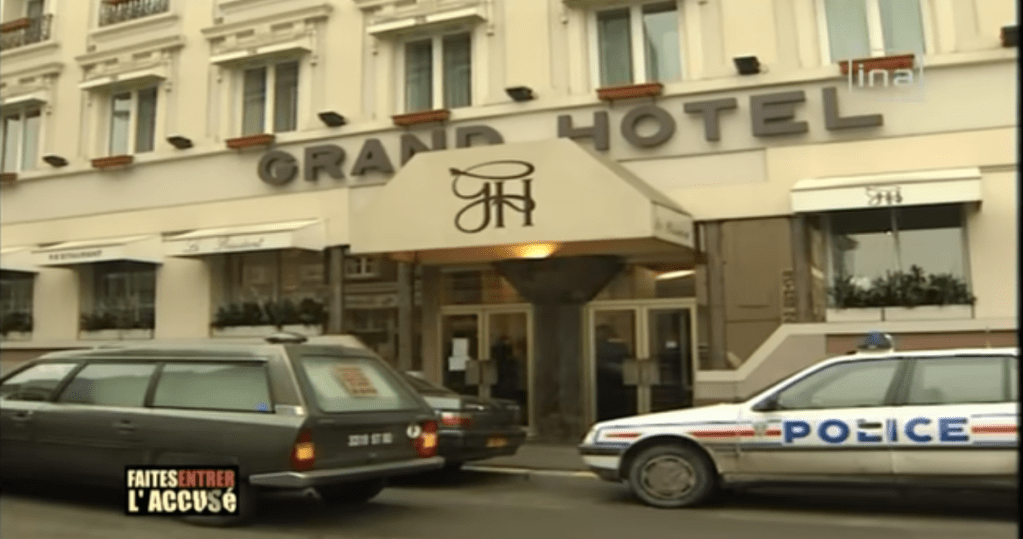
The Grand Hôtel has been open since 1954 and is considered the most elegant establishment in the city center.
It is owned by Léo Roupioz and managed by his partner, Gisèle Kunstler.
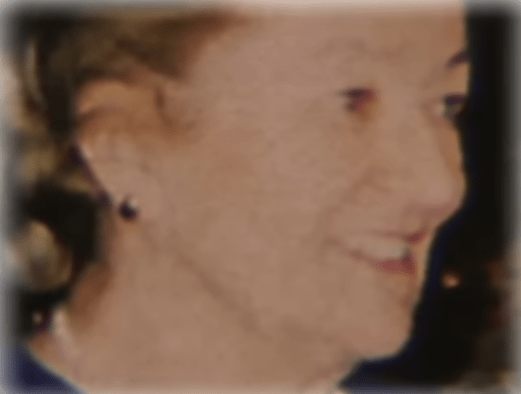
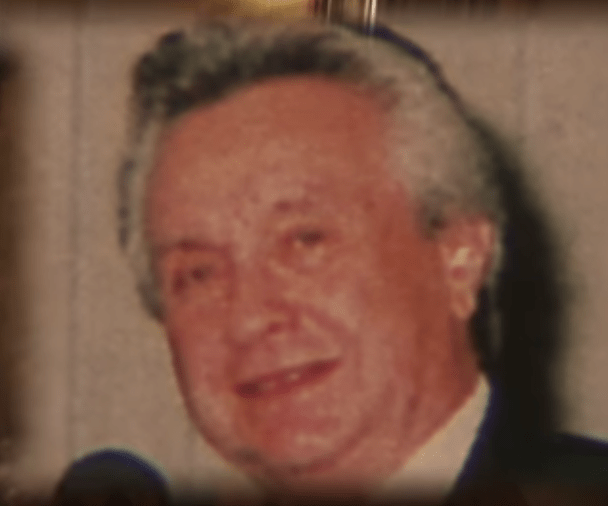
Léo is a prominent figure in the city and a key player in local business. He owns several hotels, restaurants, and a nightclub in the Saint-Quentin area. He also has travel agencies in the Paris region, where he spends most of his time. Gisèle supports him by managing the Grand Hôtel. She has a strong personality but knows how to make herself loved. She is particularly appreciated by Michèle Fabris, the receptionist, with whom she often chats about this and that.

Michèle just got married to Stéphane, the night watchman whom Jean-Baptiste is replacing, and is simply enjoying the start of her adult life. The hotel is doing well and there seems to be a good working atmosphere. That is, until Jean-Baptiste, the time bomb who is about to turn everything upside down, arrives on the scene.
Working in the hotel industry means working in a strict, structured environment. A hierarchical one. And Jean-Baptiste doesn’t like that. Normally, people mellow with age, but despite his approaching retirement, he continues to stubbornly reject authority. He has decent relationships with some of his colleagues, but over time he enters an open conflict with Gisèle, whom he finds tyrannical. Guilty by association, Michèle also gets her share of criticism. Jean-Baptiste finds her incompetent and criticizes her for reporting everything to Gisèle, to the point of calling her “The Eye of Moscow.” He even tells a colleague that one day she will be found “sprawled across the reception desk.”
Everyone manages to put up with him for seven years, but he pushes the limits, and Léo ends up having to take action. In 1997, he sends Jean-Baptiste a warning, demanding a written apology for “rude and defamatory” comments he allegedly made about Gisèle. He also prepares a second letter addressing the subject of retirement. However, he never gets the chance to send this last letter.
On January 19, 1997, Jean-Baptiste begins his shift as usual, but this night would be anything but normal. Around 10 p.m., he returns home and grabs a .22 long rifle and a hatchet in case the gun jams. He returns to the hotel and, around midnight, enters the room where Léo, 72, and Gisèle, 66, are sleeping. He wakes up the couple to “talk,” but Léo asks him to leave, which triggers Jean-Baptiste’s murderous rampage.
He attacks Léo while Gisèle takes refuge in the bathroom. He kills the poor man with the hatchet, then goes to look for Gisèle in the bathroom. He pushes her onto the bed, shoots her in the head, and finishes her off with the hatchet. He then goes down to the reception desk to take two pieces of paper on which he writes words that he places on the bodies. On Gisèle’s body, the note reads: “For five years of humiliation, defamation, blackmail, false accusations, and relentless efforts to sow discord among the staff. […] May this serve as a lesson to you and your ilk.” On Léo’s body, the note reads: « For your indifference, your pretentiousness, your refusal to engage in dialogue, for your shady dealings and their victims. […] May this also serve your ilk. »
Once he finishes his macabre staging, he resumes his duties and waits. He’s waiting for Michèle. When she arrives at around 7 a.m. to start her shift, he lures her into the basement, pretending there is a leak. Once they are alone, he lists his grievances to the poor 32-year-old receptionist before shooting her in the head and hacking her several times with the hatchet.
Satisfied, he sends Philippe Bertrand, the bellboy, downstairs, again using the excuse of the leak. He locks him in the basement, and when Philippe asks him to let him out because they’ll get yelled at if the work isn’t done, Jean-Baptiste replies, “Don’t worry, the bosses won’t bother us anymore, I shot them.” Philippe, shocked, mentions Michèle, to which his colleague replies: “The receptionist, I shot her too. She’s over there, in the wine cellar.”
Jean-Baptiste then leaves the poor bellboy in the basement and goes back upstairs to serve breakfast to the guests. He then writes in the staff register, next to Michèle’s name: “Permanent absence of the person concerned.” Finally, he empties the cash register and leaves with 12,000 francs (approximately €2,821 or 3,295 USD), leaving a note explaining that this is for his pay and paid vacation time.
We don’t know who calls the fire department, or why this person mentions sickness rather than deaths, but in any case, they arrive and discover the bodies of Leo and Gisèle in their room. They leave the crime scene untouched and notify the police, who arrive just in time, as the firefighters are called to a fire in a studio on Rue de l’Est.
The police quickly realize that the receptionist and the bellboy are missing. They search the entire hotel and eventually find Philippe in the basement. The poor bellboy tells them everything, and that is how they find Michèle’s body in the wine cellar. They continue their initial investigation and find the words and the empty cash box.
When the firefighters arrive at the studio, the fire has already extinguished itself due to a lack of oxygen. The various points of origin leave no doubt that the fire was started deliberately. They examine the studio, which is in a terrible state. Clothes, bags, food scraps, and hundreds of newspapers are scattered everywhere. After questioning the neighbors, they learn that this is Jean-Baptiste’s apartment and notify the police, who on their end have noticed that Michèle’s car is missing.
A wanted poster is created using the only photo found in Jean-Baptiste’s studio (well, he has no friends or family, and selfies weren’t a thing back then). The media has already picked up on the story, so it’s safe to say that the whole of France is looking for him. The police are monitoring train stations and hotels in the area, but to no avail.
On January 29, Michèle’s Volkswagen Polo is found in Amiens. The police find the bloodstained hatchet in the trunk and advertising flyers on the hood. These flyers show that the car has been there since the 20th, meaning that Jean-Baptiste has been out of town for a while. There is a slight problem: the car is parked right between the two train stations in Amiens, which leaves two possibilities. Either Jean-Baptiste left for the Saint-Roch station and headed for the coast to reach the United Kingdom, or he left for the central station to reach Paris.
An international arrest warrant is issued, Scotland Yard is notified, and a special hotline is set up. People call to say they have seen the fugitive in Paris, so the investigators notify the hotel union in case Jean-Baptiste tries to find work. This yields no results, as Jean-Baptiste will finally be caught as a customer.
On the morning of May 22, 1997, the manager of the La Nouvelle France hotel calls the 10th arrondissement police station to report the theft of his cash box, which contains approximately 5,000 francs (around €1,175 or 1,372 USD). He is convinced that a guest committed the crime, so the police begins searching the rooms. Most guests let them do so, but when they arrive at the room of a certain Mr. Dampierre, they find an exasperated man who wants to get it over with as quickly as possible.
When the police officers open his wardrobe, they find an M16 rifle and ammunition. Naturally surprised, the police officers ask Mr. Dampierre what he is doing with all this, to which he replies that he has been attacked and that he is “not the type to let himself be pushed around.” Unconvinced, the police officers continue their search and find newspaper clippings about the Grand Hôtel tragedy, as well as an Orange Card (Paris subway card) in the name of… Jean-Baptiste Hennequin (please pretend to be surprised). However, the police apparently do not read the newspaper clippings, as they fail to make the connection and arrest the fugitive for illegal possession of a weapon. It is only once they arrive at the police station that they enter his name into the database and realize they have a lot of paperwork to do.
While waiting for the Amiens police to come and pick up their man, the Paris police talk to the murderer, who doesn’t hesitate to tell them that he is just a persecuted little guy who defended himself against merciless torturers who were ruining his life. He even dares to say, “Of the four stars, the Grand Hôtel owes me at least three.” Well, it’s well known that no one cares about cooks, maids, bellboys, or receptionists, it’s the night watchmen who are responsible for everything!
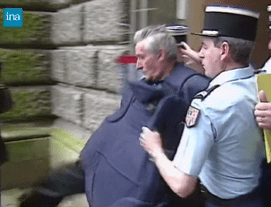
The next day, the Amiens police comes to pick up their package and take him to the investigating judge. A crowd is waiting for him outside the courthouse, demanding his death, and he doesn’t help his case when he kicks a photographer on his way out. He is then taken to his cell, and I’m sure he makes a lot of friends in prison (not).
The investigation progresses, but not as Jean-Baptiste would have liked, so during the reconstruction (in which he refuses to participate), he yells at the investigating judge because, in his opinion, he should have been investigating the “real culprits.”
Jean-Baptiste Hennequin’s trial begins on June 17, 1999, before the Laon Assize Court. The murderer stands upright in his three-piece suit, ready to move the court to tears with his tales of terrible persecution at the hands of his employers. According to him, working at the Grand Hôtel was torture. However, when his past is brought up, he says that it is not the issue: “What interests me is talking about the real culprits, the ones I killed.” After all, it would be a shame to destroy his imagined perfect victim image by talking about his criminal record. He even refused a psychiatric evaluation during his incarceration, so the court is forced to dig up the one from 1985, which I think is sufficient. Finally, the prosecutor can’t ask his relatives to talk about him on the stand because… there aren’t any. Absolutely no one who had the misfortune of being part of Jean-Baptiste’s life made the trip. But anyway, there’s no need for them, because Jean-Baptiste is burying himself all on his own, notably by turning to Michèle’s relatives and telling them that if she had had a better education, she would still be alive. Come on, I know you’re fed up with him, so let’s move on to the verdict.
The deliberation takes barely an hour. On June 18, 1999, Jean-Baptiste is sentenced to life imprisonment with a minimum term of 22 years for murder and false imprisonment. And do you remember how impossible it was to appeal a criminal trial, which caused Guy Mauvillain so much suffering? The verdict in the Hennequin trial is handed down almost exactly one year before the enactment of Law No. 2000-516 (published in the JORF on June 16, 2000, with a correction on July 8, 2000), which introduced the possibility of appealing a criminal court verdict. Jean-Baptiste therefore appealed with the French Supreme Court, and his appeal was rejected on April 19, 2000.
Unfortunately, the drama did not end with the verdict. The victims’ families remain traumatized. Among them, Stéphane, Michèle’s husband, never remarried. The Grand Hôtel saw its reputation plummet after the murders and finally closed its doors in 2019.
Jean-Baptiste Hennequin died in prison in 2021, offering little comfort to all those he had caused to suffer. The imaginary victim will no longer be able to harm anyone.
 Murder, Wine & Cheese
Laisser un commentaire