
Hi everyone, I hope you’re doing well!
Today’s case doesn’t center around a maniac, or even an opportunist. Instead it’s about a simple man who lived in the wrong place at the wrong time and with the wrong past. It’s about a system that favored convenience over justice. I’m going to tell you about a series of mistakes that cost a life, an investigation, and six years of an innocent man’s life. Without further ado, let me tell you about the trials of Guy Mauvillain.
1975 is a year of change, but this case makes it seem otherwise.
In January 1975, the ORTF was replaced by the audiovisual companies we French people know today: Radio-France, TF1, INA, etc. In La Rochelle, residents took advantage of these new channels to take their minds off the mysterious attacks that had been targeting elderly people. However, the incident of January 9th, 1975 is so sadly absurd that it will at some point become unavoidable on either side of the small screen.
That evening, young Ghislaine is going about her business when she hears the doorbell ring at her neighbor Élise Meilhan’s house. The 76-year-old retired teacher never has visitors because she’s very frightened by the recent attacks and values her peace and quiet. Ghislaine’s initial surprise quickly turns to concern when she hears an altercation. She tries to call Élise but gets no answer, so she alerts other neighbors, who have no better luck when they knock on the old lady’s door. The fire department is called and arrives half an hour later. The firefighters force open the back door and are confronted with a horrific scene.
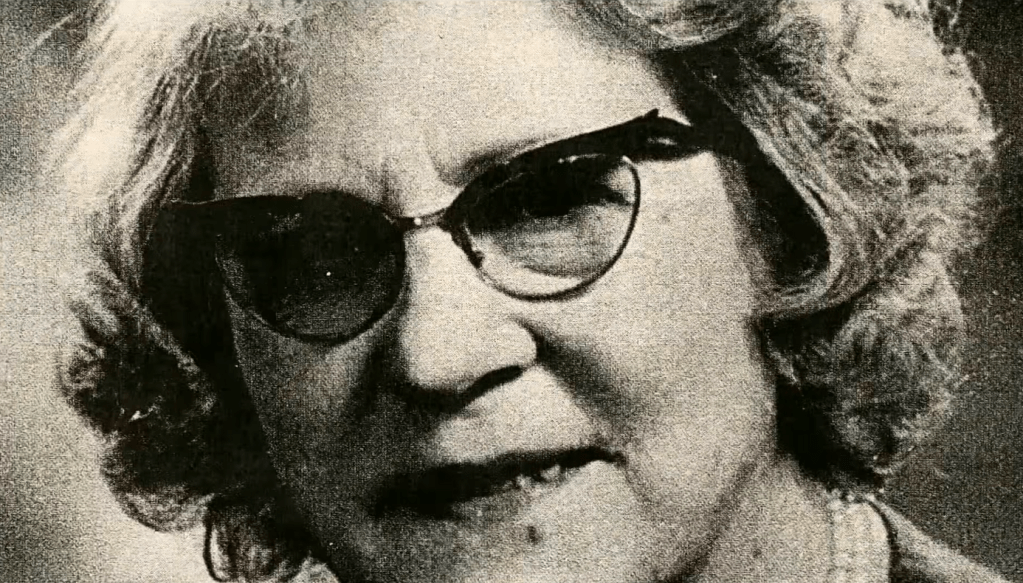
Élise is lying on the ground, her skull crushed, struggling to breathe. The firefighters begin to administer first aid, but are interrupted by a presence as absurd as it is devastating.
Dr. Girard, a medical examiner passing by, notices the emergency vehicles and seems interested in what is happening at Élise’s house. Note that I say “interested” and not “concerned.”
He mysteriously manages to enter the victim’s home and begins to examine her despite the protests of the firefighters. He even takes the liberty of putting his fingers inside poor Élise’s head wound, and she probably can’t hear him telling the professionals that it’s better to leave her there anyway since she doesn’t have long to live.
The ambulance arrives a few moments later, and Élise is finally taken to the hospital. Not content with having already delayed treatment, Dr. Girard invites himself into the ambulance and is the first person Élise sees when she opens her eyes. The person who has no business being there is the one who takes her last statement:
« What happened?
- He hit me very hard.
- Do you know who it was?
- The husband of Mrs. Mauvillain, the nurse who gives injections… »
After these last words, Élise falls into a coma. She will never wake up again. But who is Mrs. Mauvillain, and more importantly, who is her husband?
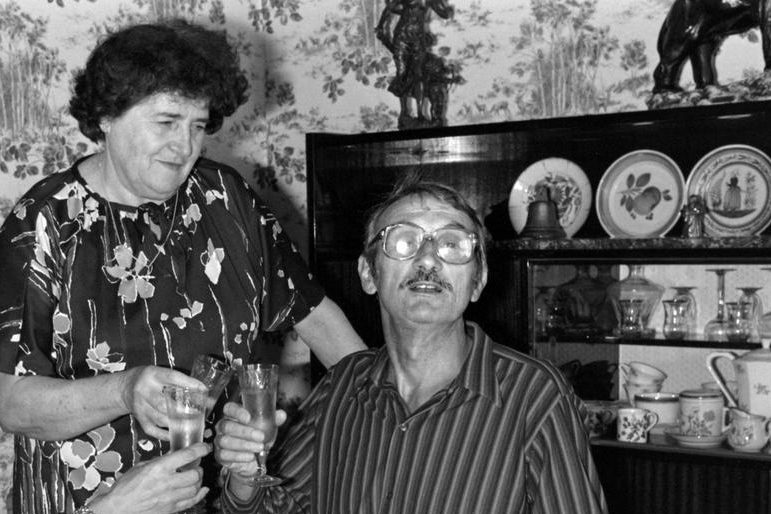
The Mauvillains are an ordinary couple living an ordinary life. Yvette Mauvillain is an assistant nurse, while Guy has recently become unemployed. When investigators visit their home after learning of Élise’s last words, the couple is in bed. Guy explains that he did not leave the house during the evening, except to pick up Yvette from work. The questioning ended there that evening, but the investigators returned the next day to search the premises.
It yields nothing. Examining the crime scene is also a waste of time. The firefighters moved the furniture to help Élise, and Dr. Girard’s intrusion certainly didn’t help either. The murder weapon is nowhere to be found, and there are no clues to give investigators a viable lead. That doesn’t stop them from placing Guy in custody based on Élise’s last statement.
From this point on, the investigation stumbles forward.
Witnesses report seeing a man in a raincoat loitering near Élise’s home. Clearly, no one else in January 1975 wears a raincoat, so it must be Guy! Furthermore, he panicked and put on his wife’s raincoat instead of his own when he left with the investigators, so he must be hiding something!
The investigators go to Guy’s home to retrieve his raincoat and find stains on it. Suspicion rises up a notch, although nothing comes from the lab analysis and the confrontation with witnesses.
During his questioning, Guy recounts his evening of January 9th once again: he read a book, chatted with his neighbor, prepared dinner (boiled fish with potatoes), then drove to pick up Yvette. Instead of realizing how unlikely it is that he is guilty and exploring other leads, the investigators decide that Guy must have put dinner on the stove, gone to attack Élise, committed the horrific crime in record time, and returned home in time to have a delicious dinner waiting for Yvette when she got home from work. This would explain why Élise opened the door, since she knew Guy. Totally plausible for anyone with a room-temperature IQ.
There are a few additional inconsistencies that show that this investigation is heading in the wrong direction. Admittedly, Élise mentioned Guy when she woke up in the ambulance, but she referred to him as the husband of “the nurse who gives injections.” Yvette Mauvillain is not a nurse who gives injections, but an assistant nurses who changes Élise’s sister’s bandages for free (which is how Élise met Guy, who accompanies his wife from time to time). There is indeed a nurse who gives injections in the neighborhood where Élise lives. She is a widow, but the investigators are already following a lead that is going nowhere, so why not question her and follow another lead? This question will never be answered, and this woman will never be interviewed.
It becomes clear that Élise’s words, spoken when her lucidity was not guaranteed, should be treated with caution, but they are gospel to investigators, who continue to question Guy. The poor man is presumed guilty, even seeing his past used against him.
Guy is a quiet man, but that wasn’t always the case. He was a high roller in his youth, which didn’t attract attention in the best way. Caught for car theft, jewelry theft, and hotel pimping (he rented a studio appartment to a sex worker), he served time in prison. The joys of prison life calmed him down though, as after his release, he never committed another crime, but that’s not what the investigators pay attention to. They are in a hurry to close this case, which is drawing too much attention on the insecurity in La Rochelle and their inefficiency, so Guy’s criminal past makes him the perfect scapegoat.
On January 27th, 1975, Élise Meilhan dies in the hospital, and everything accelerates. Investigators go to the Mauvillains’ home that same day. Yvette is about to leave for work, and Guy is in the kitchen. The investigators explain that they need to speak to their suspect again, so Yvette tells Guy not to keep them waiting. The fifty-year-old goes to change and follows the investigators. A few days later, Yvette learns that he has been charged and imprisoned.
Before the investigating magistrate, Guy unfortunately remains naive. He continues to defend himself, but is so sure that the misunderstanding will resolve itself that he does not ask for a lawyer. He is incarcerated for the entire duration of the investigation, but remains convinced that he will be released, to the point where he does not even open his suitcase.
While he waits in his cell, the world moves on. There is an attack at the Gare de l’Est train station, Louis de Funès has two heart attacks, the terrorist nicknamed “Carlos” commits a triple murder, the carte orange (the predecessor of the Navigo pass that we use today) is introduced, the G7 is held in Rambouillet, and the number of unemployed people exceeds one million, which is unprecedented at the time.
Finally, Guy is tried on November 25th in Saintes. And no, I’m not saying that his trial begins on November 25th, I’m saying that it takes place on November 25th. After a dubious investigation that was so rushed that the prosecutor admits in court that no motive has been determined due to lack of time, Guy Mauvillain’s fate is sealed in half a day. In comparison, the four-day trial of Philippe Schneider, the “murderous druid”, seems interminable.
During that morning, four witnesses, including Dr. Girard, who was not incriminated at all for his incredible behavior, and two experts are called by the prosecution. Élise’s last words are deemed credible, and the prosecutor even says to Guy, “It is not I who accuses you […], it is your victim!”
On the other side of the courtroom, of course, sits the defendant. Guy is described as an unstable unemployed criminal. Photos from the crime scene reconstruction are shown, in which he can be seen, looking somewhat haggard, striking a mannequin’s skull with a wrench (apparently deemed to be the murder weapon). If the photos don’t help him, his lawyer helps him even less. The defense calls no witnesses or experts, and after less than 30 minutes of deliberation, Guy is sentenced to 18 years in prison, a sentence as strange as the investigation given the crime and the possibility of the death penalty. Could this be an admission by the court that it realized the absurdity of how the case was handled? It doesn’t matter, Guy goes back to his cell.
Yvette does not give up on him and remains determined to prove his innocence. Her intentions are commendable, but the system she is up against is a formidable opponent, even today and especially at that time. Let’s start with the available solutions. Seeing that Guy has been found guilty, you probably thought he would appeal, but in 1975 it is not yet possible to appeal an Assize Court trial. One of the only possible remedies was a judicial review. Today, a review of a judgment can be requested when a new fact or element unknown at the time of the trial gives rise to reasonable doubt as to the guilt of the convicted person. In 1975, you almost have to do the court’s work for it and serve the acquittal on a silver platter.
Fortunately, Yvette and Guy don’t lose heart and soon manage to rally other people shocked by the sad absurdity of the case. A committee is set up, and support began to grow. The Human Rights League, Simone Signoret, Yves Montand, Daniel Bovet…many celebrities and institutions join the fight, so Guy is far from alone. His new lawyer, Maître Dupeux, goes through the case point by point.
The motive: nonexistent. Guy has no history of violence, and money was not a problem for the Mauvillains. Despite the fact that Guy was no longer working, the couple was not poor and had even just won a few thousand francs on the lottery.
The crime scene: bloody, but silent. The furniture moved by the emergency responders and Dr. Girard’s intrusion destroyed any chance of finding usable evidence. Furthermore, the murder weapon was never found.
The testimonies of passersby and neighbors, the stains on Guy’s raincoat: no conclusions.
Élise’s last statement: although the victim mentioned Guy, there are reasons to doubt her words. It is highly unlikely that she was lucid in the ambulance. Admittedly, the prosecution’s experts claimed the opposite at the trial, but Guy’s supporters eventually discovered that they had been asked only one question: “Is it possible that the victim could have recognized her attacker?” To which the experts had obviously answered yes.
After reviewing the case, Guy’s lawyers file a motion for review, but it is rejected in August 1979 because the Court of Cassation does not consider their conclusions to be new facts. The judicial system refuses to acknowledge its mistake, but the standoff is about to get tougher.
In 1981, a counter-investigation by journalist Paul Lefèvre makes the case impossible to ignore. In his report, we learn that a neighbor of the Mauvillains heard Guy in his kitchen on the evening of the crime, thus confirming his alibi. Poor sound insulation is a good thing for once. This neighbor did not have the opportunity to tell the investigators, as they had only asked her if she had heard any strange noises. However, the sound of pots and pans was not considered strange in 1975. She had nevertheless sent a letter to the prosecutor when she learned of Guy’s incarceration, but nothing came of it.
We also hear from Dr. Girard, who this time recounts that he confirmed Élise’s lucidity by asking her age when she woke up. However, this part of his testimony does not appear in any of the police transcripts or at the trial.
The report sparks widespread outrage, the case takes on political dimensions, and becomes symbolic of an overly rigid state. With the presidential elections just a few months away and the right being heavily criticised, Guy becomes proof of police and judicial incompetence. Finally, he receives decisive support from Robert Badinter. Already known for his fight against the death penalty, Badinter declares that he would not let Guy remain in prison. When he becomes Minister of Justice in May 1981, and while Maître Dupeux has filed a second appeal, he suspends Guy’s sentence pending the Court of Cassation’s decision.
Guy Mauvillain finally regains his freedom after six years in prison. The first color 8 p.m. news broadcast has been aired. France has been gripped by fear following the kidnapping and murder of young Philippe Bertrand by Patrick Henry, who ironically escaped the death penalty thanks to Robert Badinter. Christian Ranucci has been tried and executed. Daylight saving time has been reinstated. Supermarkets have begun selling unbranded products. The national lottery has been created. Family benefits have been made available to all eligible French households. Jacques Chirac is the mayor of Paris. The last person sentenced to death, Hamida Djandoubi, has been executed. René Goscinny, the creator of Astérix, has died. Salaries are now paid monthly throughout France. Roman Polanski has settled here. Soldiers are seen more often thanks to the Vigipirate plan (still in effect today), which followed more than fifteen terrorist attacks. Claude François and Jacques Brel have died. The first French McDonald’s restaurant has opened in Strasbourg. Jacques Mesrine was killed by the police. Jean-Paul Sartre passed away. Guy Mauvillain is the same man, but the world has changed.
While awaiting the Court of Cassation’s response, he delivers municipal mail to earn a living and continues the fight to prove his innocence.
On November 19th, 1982, the Court of Cassation rejects the request for review, and Guy has to return to prison. Fortunately, the political climate has changed, so when Maître Dupeux requests a presidential pardon from François Mitterrand, the latter grants it. This respite allows Guy to remain free and a year later, his lawyers find a procedural flaw in the Saintes trial concerning the selection of jurors. The retrial is finally granted.
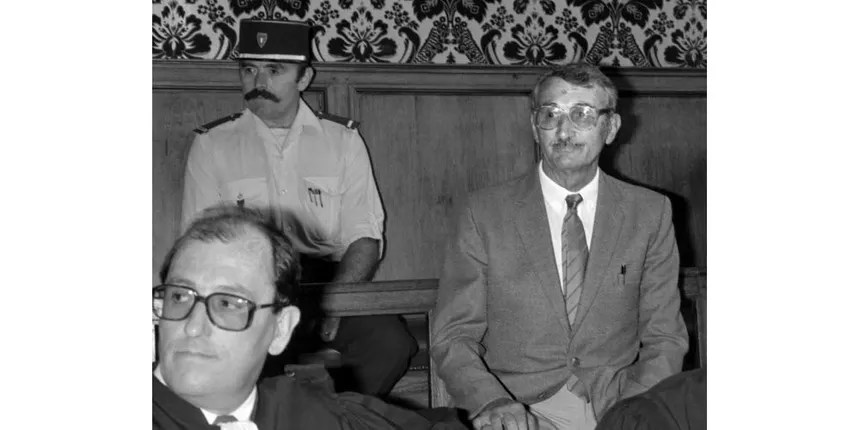
Guy Mauvillain’s second trial begins on June 26th, 1982, in Bordeaux. The prosecution returns with experts who again claim that Élise was lucid at the time of her last statement. However, the defense is ready this time and calls its own witnesses, including the director of the prison where Guy was incarcerated (who’s on his side), and experts. Among them, a neurosurgeon brings a piece of evidence that changes everything: X-rays of Élise Meilhan’s skull. Examined for the first time since 1975 (yes, you read that right), these X-rays, combined with the fact that Élise remained unconscious for an hour and a half, allows clear conclusions to be drawn about the victim’s lucidity during her last moments of consciousness. The extent of the poor retiree’s injuries become so obvious that the prosecution’s experts retract their statements. Élise couldn’t have been lucid when she mentioned Guy Mauvillain.
As his argument crumbles, the prosecutor remains unperturbed (which is almost respectable) and suddenly suggests that Guy murdered Élise for sexual gratification. This audacious twist does not fly, and after a four-day trial, Guy is acquitted after three hours of deliberation.
When the verdict is announced, Guy takes a moment to realize that he has just been acquitted, then bursts into tears. Yvette takes him in her arms and cries with him. The couple is finally free and leaves to start a new life in the Vendée region. The government apologizes with a 400,000 francs compensation, which hopefully allows them to live comfortably. Finally, Guy dies in 2003, and Yvette follows him three years later.
Unfortunately, the investigation into the murder of Élise Meilhan, the poor retiree who had never hurt anyone, has been at a standstill since the acquittal.
Tell me what you think about this case down below, or on r/Murder_Wine_Cheese, Tumblr or Bluesky. I hope you’ll find some money on the ground today, and I’ll see you next time!
 Murder, Wine & Cheese
Laisser un commentaire